
National Award-winning,
Family-run Newspaper
Family-run Newspaper
Recently, students from the Salisbury School, Connecticut traveled to the Catskill Fly Fishing Center & Museum to learn more about the history and culture surrounding fly fishing in the …
This item is available in full to subscribers.
Please log in to continue |
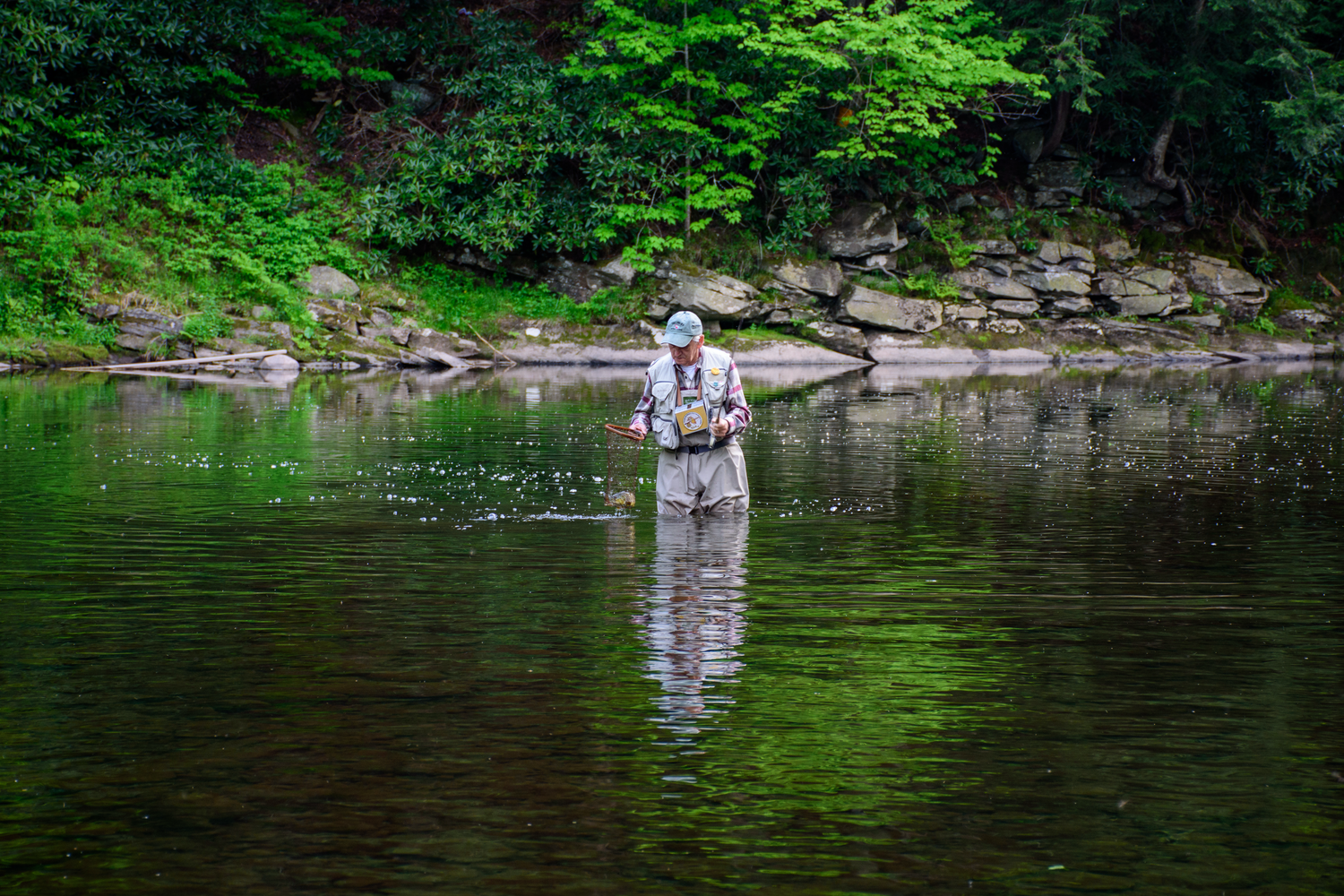


Recently, students from the Salisbury School, Connecticut traveled to the Catskill Fly Fishing Center & Museum to learn more about the history and culture surrounding fly fishing in the Catskills. The students and their instructor had prepared for an interview conducted in the Museum, and asked a number of thought-provoking questions which included ‘what makes the Catskills a special place for trout’ and ‘are the Catskill streams being taken care of more than other streams? What can the average person do to improve water health’, and ‘why should a person care about taking action even if they don’t fish? Why is fly-fishing special and different from “regular” fishing?’
It was a pleasure speaking with these students, describing how we live in an area that offers clean air, beautiful landscapes, forested mountains, and the cold, pure, highly oxygenated water required by trout. And thanks to the efforts of the NYS Department of Environmental Conservation, conservation-minded individuals and organizations such as Trout Unlimited, the Theodore Gordon Fly Fishers, the Catskill Fly Fishing Center & Museum and others, our local streams are afforded a higher degree of protection. Where there are populations of wild and spawning trout, Catskill streams benefit from enhanced environmental rules and fishing regulations. In addition, those streams located in the Watershed that supplies New York City with its drinking water receive added safeguards from the NYC Department of Environmental Protection, which enforces strict rules regulating the treatment of wastewater (including stormwater runoff) and pesticide use to prevent water contamination.
We discussed the environment, and how important it is to be mindful of taking care of our lands and streams. From the water we drink to the air we breathe and the enjoyment we experience when gazing at beautiful landscapes, we are all affected; whether or not a person chooses to fish. These concerns are passed on to our children and grandchildren by our example. We are fortunate in our county to have the Rockland Central School (Livingston Manor/Roscoe) and Sullivan West Elementary School children participate in the Trout in the Classroom program. The program involves having the students incubate eyed trout eggs received from the NYS DEC Catskill Fish Hatchery in the fall, hatching and watching them grow in tanks in the classroom, and then releasing them into nearby trout streams (the Willowemoc/Beaverkill/Callicoon Creek) in the spring. The children learn about the trout’s coldwater ecosystem in a complete hands-on learning experience. I remember back in the early 1990s, a Livingston Manor 3rd-grade teacher extolled the benefits of the program, stating that after the experience of learning about the importance of a clean environment, her students would never drop so much as a gum wrapper on the ground.
Other questions were asked about fly-fishing and the lure of trout fishing in general - which brought memories of growing up and fishing as a young child. After learning the basics from my Dad, I would often venture out on my own, to Sundown Creek and the Rondout, fishing with whatever I could find underneath rocks or attach to my hook that I thought might entice a fish. It brought an awareness of how the trout reacted to disturbances and to be stealthy in my approach, how to read water to determine where the trout may lie, and how to set the hook. Of course at that time it was of utmost importance to bring home whatever “prize” I managed to catch for Mom to cook up for supper.
Dad allowed me to use his fly-rod on occasion but it was after I graduated from college with a major in Fish and Wildlife technology and landed a job at the DEC in New Paltz that I became a fly-fisher, after meeting Ed Van Put, who taught me to fly-fish and became my husband.
There is something almost magical about fly-fishing, beginning with a heightened sensory awareness of nature, especially during this time of year, to hear the joyful avian chorus of chirps and warbles, treading lightly through meadows carpeted with azure bluets and woodlands surrounded by the spiky, sweet blossoms of honeysuckle, leading on to the symphony of the splashes and splatters of the gurgling stream. For me, it is more an art form than a sport; it is meditation in motion. Fly-fishing is rewarding, after learning about fish and flies, hatches and habitat, perfecting your presentation and carefully casting each time you go out. It’s the whisssshhh of the flyline as it glides thru the guides; the flexibility of the rod as it loads, bends back and springs forward to facilitate landing the fly weightlessly on the water. It involves trying to entice a fish to take a fly that is hand-made. The fly itself is a work of art; an imitation of a natural but made of feathers, fur, silk and tinsel, meticulously wound with gossamer thread onto a hook - tied on to an extremely fine monofilament tippet. The tippet is attached to a tapered leader, then a graduated fly line. The graceful act of casting the line with perfect timing through a long, beautifully supple fly-rod, especially one made of bamboo, is also an art.
Fly-fishing does not involve great strength but rather timing and coordination and ‘feeling’ the line as it passes overhead, concentrating on gently laying the fly on the water to appear as life-like as possible. It requires time spent, with practice and patience despite sloppy casts and tangled lines, but after mastering the rhythm and timing, you’ll be fly-fishing.
There are many elements involved with fly-fishing which, for many, is a life-long activity. In addition to learning to read water to determine where the fish are, focusing on the mechanics of casting, retrieving and landing fish, there are the pleasant pastimes of learning to tie flies, making your own leaders, or even building a fly-rod. It has been said that there are more books written about fly-fishing than any other outdoor sport; from as far back as Dame Juliana Berners’ A Treatyse of Fysshynge Wyth an Angle, first published in 1496, and Izaak Walton’s The Compleat Angler written in 1653, to Norman Maclean’s A River Runs Through It published in 1976 and adapted into the award-winning drama film directed by Robert Redford in 1992.
Fly-fishing is an exciting and gratifying pastime in which to get involved. Whether you strike out on your own, perhaps after reading articles and books, doing a bit of research, or heading out with a friend or family member; or taking advantage of some of the many opportunities offered locally through classes and expert guide service from our local fly shops and sports shops, it’s the perfect time to get out and enjoy all that the sport has to offer. Hope to see you streamside!


Comments
No comments on this item Please log in to comment by clicking here