
National Award-winning,
Family-run Newspaper
Family-run Newspaper
Z ebra has defied nearly every rule of rock and roll longevity. Fifty years after they were formed, the band still has all three original members intact and continues to sell out venues, evolve their …
This item is available in full to subscribers.
Please log in to continue |
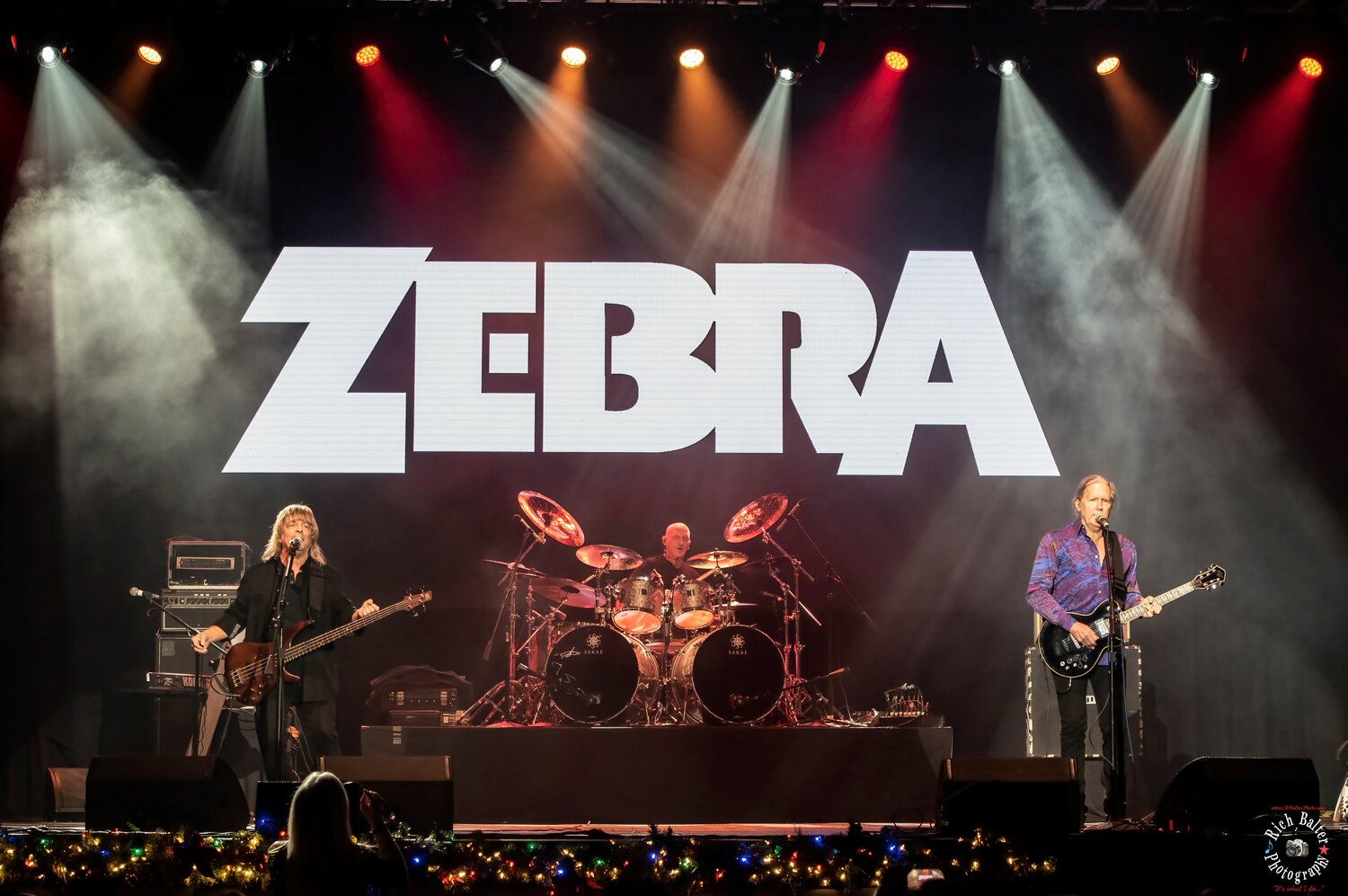
Zebra has defied nearly every rule of rock and roll longevity. Fifty years after they were formed, the band still has all three original members intact and continues to sell out venues, evolve their sound, and attract both fiercely loyal fans and new generations discovering their music for the first time.
At the center of it all is Randy Jackson — lead vocalist, guitarist, primary songwriter, and the unmistakable voice behind Zebra’s signature sound. Zebra began in 1975 in New Orleans with Jackson, bassist/keyboardist Felix Hanemann and drummer Guy Gelso. From the beginning, Jackson’s soaring vocals, intricate guitar work, and progressive hard-rock sensibilities set the band apart.
After moving to their new home on Long Island, Zebra found themselves the apple of Atlantic Records’ eye. Their 1983 self-titled debut album, Zebra, went gold, and sold more than 75,000 copies in its first week. Songs like “Who’s Behind the Door?” and “Tell Me What You Want” remain rock radio classics.
While many of their musical peers were shooting stars who burned brightly before fading away, Zebra remains active 50 years after forming and is preparing to release their first studio album in 22 years.
On Saturday, March 28 Zebra will perform in The Event Gallery at Bethel Woods Center for the Arts.
In an interview Jackson discussed the secret to Zebra’s longevity, the rollercoaster that is the music industry and his own solo career.
Half a century together is an amazing milestone. But what worked in those early years?
I think what helped us stay together is that we were working and making good money in the years before we got a record deal. And those first 5 years, you kind of know each other pretty well. I don’t think any of us really expected anymore out of each other. We were willing to accept what each person was. I always say that what probably helped is that we were all on the same page politically. We watched bands break up over different things. It worked out for us.
And your fan base has grown up with you.
Bands that have been a lot more successful than us selling records don’t tour anymore. We had such a huge following that we built up over those first 8 years. Those people kind of grew up with us. They were sneaking into bars, a lot of them were in high school at the time and we just became like a big part of their youth and they’re still here. We’re getting up there in age and they pass it on to their kids and their grandkids. It’s a unique situation.
You blame some of the delays for the new album because of life and grandkids?
All of us have grandkids. Guy is actually going to have a great grandchild. The rock drummer had a great grandchild. That keeps us all pretty busy. This doesn’t compute. But it’s great.
You said Zebra was not into gimmicks. What did you mean?
I couldn’t go out on stage and do something that I wasn’t comfortable with. Take Twisted Sister a great example. When they go out, they put on a huge, huge show. They got stage clothes, crazy makeup, you know, their whole thing is kind of being wild and they own it, they believe in it. I just couldn’t do that. My whole thing was just getting out there as me and being comfortable in my own shoes. I love watching bands that are kind of crazy, lots of action, movement on stage. We never thought we needed to do anything like that to get our music across.
Zebra became popular in the ‘80s with all those hair bands. But that’s not how you would describe Zebra.
Bands like Poison or Motley Crew, even Twisted Sister, had more of what I would call an ‘80s vibe to them. I don’t think that our music kind of fit into that category exactly. We were ready for the record deal the second year we were together. A lot of the labels that were rejecting us said, ‘You guys have some great songs and it would have been great if you’d have been here 10 years ago, but, you’re a little late to the game,’ and we were like, okay, well, we’ll just keep playing. Finally, Atlantic Records decided to sign us mainly because we were getting so much airplay on radio station WBAB. Things just work out.
Do you remember the first time you heard ‘Who’s Behind the Door’ on the radio?
It was when we had given our demo tapes to WBAB. It wasn’t when the record had been released, it was a couple of years before that. It was early morning. I’m coming home from a gig and all of a sudden here comes the song on the radio and I pulled over and listened to it. It was kind of surreal, you know, especially because we didn’t even have a record deal and they had decided to put it in regular rotation, which was a rare thing. So, yeah, that one kind of stopped me.
The name ‘Zebra’ is based on a 1926 Vogue magazine cover?
True. Absolutely. We were trying to figure out a name for the band. We met at a bar in New Orleans, and there was a poster that was decoupage, and it was a print of the cover from the Vogue magazine with a woman riding a zebra. As we were getting up to leave, I looked over and said, ‘hey, let’s just call it Zebra.’ And everybody kind of agreed. I think we had several pitchers of beer at that point, but we needed a name because we had a gig the next day, we didn’t want to just go up on stage and say we didn’t know who we were.
What were the difficulties repeating the success of that first album?
One of the big issues was that we had been playing for eight years and we weren’t learning or writing a lot of songs continuously at that time. I had a lot of songs, but I had eight years to write them, and we had been testing the songs along the way. The first album was made up of the songs that we thought people liked the best, that we played a lot. We kept a couple back that we could put on the second record. I did have a lot of material, but I was not really prepared. I realized at that point, I got to start writing songs. I can’t just be out on the road playing and having a good time.
Were you surprised how quickly that first album sold?
We were happy we had success when it did. When that first album came out, we had a big surge of sales in the very beginning and then it just stopped because all the people that knew the band had all the records. We were close to 100,000 records within the first month, but then it just slowed down and it wasn’t until a radio station in St. Louis started playing us that we started selling some more records. With the second album there were complaints that the vocals weren’t loud enough. I think that had a lot to do with why the initial push wasn’t so great. By the time we had the third album Bon Jovi had just come out and people kept asking us about them.
How did you hook up with Jefferson Airplane?
My manager at the time was also handling Kenny Arnoff, who was a drummer with the Jefferson Airplane. The original band was getting back together to do a tour. It was 1989. This would be Jorma Kaukonen, Paul Cantor and Grace. They needed a utility guy to play guitar. Kenny said, oh, I know this guy he could do it, so they called me up. It was a thrill. There I was, you know, like I’m 11 years old playing with the band I just bought the record for.
It is amazing how many 70-plus rock bands are still performing.
I just find that we all have to take care of ourselves a little more at this age. I stopped partying a long time ago. I’m not going to say I didn’t have a great time doing it, but you just can’t do it forever. It doesn’t matter what status you’re at. If people come out to see us, we still enjoy playing. We’ve played for two people, and we’ve played for 20,000 people and we just enjoy it. We don’t take it too seriously. That’s the whole thing. I don’t think we ever have, and that’s allowed us to really kind of enjoy what we’re doing. We can laugh about a lot of things, along the way.


Comments
No comments on this item Please log in to comment by clicking here